Wide Fit Shoes UK buying guide: choosing width, checking fit and saving sensibly
Posted on |
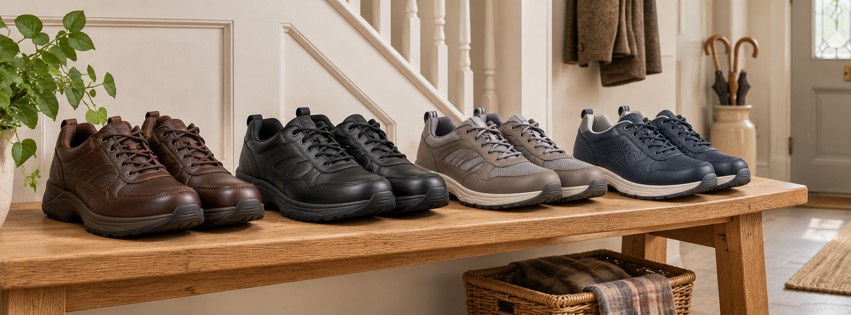
Buying a wider shoe is easiest when you separate three decisions: the length you need, the space your foot needs across the shoe, and the job the footwear must do. A discounted pair only offers good value if those decisions work together. This guide explains how to build a useful shortlist at Wide Fit Shoes, compare the final cost and avoid ordering a size simply because it is available in the sale.
For the latest published savings, visit our Wide Fit Shoes discount codes and offers page. Offers can have different eligibility rules, so read the individual conditions before moving to the shop. This is a shopping guide, rather than a medical assessment or a promise that a particular shoe will suit every foot.
Start with your everyday use
Write down where you will wear the pair most often. A trainer for commuting, a leather shoe for an office and a slipper for use indoors solve different problems. Think about the ground you normally walk on, how long you wear your shoes and whether you need a particular fastening. This gives you a clearer starting point than browsing every discounted style together.
For example, someone who wears thick socks with winter boots should judge the boots with those socks, rather than using the feel of a lightweight summer trainer as the comparison. Someone who needs to remove shoes frequently may prefer an adjustable fastening. Choose the features you actually need first, then compare the prices of models that meet that brief.
Measure length and width separately
Wide Fit Shoes lists footwear in different width fittings, including options across its advertised 2E to 8E range. That range does not mean that every model is available in every width. Use the retailer’s fit finder and the information on the particular product page to see which combinations are offered.
Measure both feet according to the shop’s instructions and keep a note of the results. Check which unit the guide uses and whether it asks for standing measurements. A difference between the two feet is useful information when asking the retailer for help. Do not simply increase the length of a shoe to obtain more width; that changes another part of the fit and may make the comparison less useful.
Keep your measurements beside your usual UK size, rather than replacing the measurements with that size. A familiar size is a starting point, not evidence that every brand or style will feel the same. Recheck the product’s conversion chart if the available options use a different sizing system.
Understand the whole shape of the shoe
Width is one part of fit. Look at the shape of the toe area, the depth of the upper, the opening and the way the fastening adjusts. Product photographs from several angles are more helpful than a single front view. Read the material description too, because a structured leather upper and a flexible textile upper can feel different even when the nominal fitting matches.
If you use an insole or have a particular footwear requirement, ask the retailer about the exact model before ordering. Do not assume that an insole is removable or that a shoe accommodates an additional insert unless the listing confirms it. Specialist requirements are a reason to get specific advice, rather than relying on a generic description of a wide fit.
Compare brands by model
The shop carries different footwear brands, and the useful comparison is between individual models. Record the model name, colour, length and width together. Two similar-looking trainers can have different specifications, so a screenshot of only the price can be misleading when you return to the shortlist later.
Look at the fastening, upper material, intended use and care guidance alongside the price. If one pair costs more, decide which feature explains that difference and whether you will use it. A higher price does not automatically mean a better choice for your routine. Equally, the cheapest pair is not a saving if you already know that its fastening or shape does not suit your needs.
Use sale filters without losing the right fit
Sale shopping works best after you have a clear size and width requirement. Filter for those requirements first, then compare the remaining styles. A headline reduction may apply to a particular colour or a limited set of sizes. Open the variant you actually intend to buy and check the price again after selecting it.
An alternative colour can be a sensible saving when the model and specification are otherwise suitable. An unsuitable fitting is a different compromise. Avoid buying a narrow or oversized pair solely because it has a larger percentage reduction. Keep one or two acceptable alternatives on your list so that you can make a deliberate choice if the first option sells out.
Consider the newsletter benefit properly
The official website advertises a 10% saving for newsletter signup. This involves registration and an emailed benefit, so it should be treated as a subscriber offer rather than an unrestricted public voucher. Read the message you receive for the exact eligibility, exclusions and redemption instructions.
Compare the eligible basket with the price of a sale alternative. Do not assume that a newsletter benefit combines with every existing reduction. If a code is supplied to you, apply it in the shop’s designated checkout field and check the resulting total. A rejected code is a reason to review the conditions, rather than repeatedly adding items you do not need to reach an assumed threshold.
Work out the delivered cost
The price of the pair is only part of the order total. Check the current delivery page and enter the correct postcode before deciding between options. The official delivery information distinguishes standard, next-day and collection arrangements, with regional differences. The detailed delivery page and the checkout estimate may use different time descriptions, so confirm the service offered for your particular order.
Where collection from the London shop is offered, consider whether travelling there is practical. Free collection can be useful for a local shopper, but a long journey can outweigh a small postage saving. If you need shoes for an event, allow time for fitting and a possible exchange as well as the advertised dispatch or delivery period.
Check returns before choosing several pairs
Ordering more than one option can make comparison easier, but first read the returns and exchange terms. Check the return window, the condition required and whether any return cost applies. Keep the original packaging and follow the instructions for trying footwear indoors. Avoid assuming that the same arrangements apply to every destination or every product category.
Keep the order confirmation and product details until you have decided what to retain. If something differs from the listing, contact the shop with the model and order reference. That gives customer service a more useful starting point than a description such as “the black trainers”. Do not discard labels or wear a pair outside while you are still deciding whether to return it.
A practical shortlist example
Imagine you need a dark trainer for everyday journeys and have identified the relevant UK length and width. Shortlist three models that meet those requirements. Write their prices, delivery charges, fastening types and return conditions in separate columns. Select the same size and colour when checking each basket so that you are comparing the actual purchase options.
Then apply any eligible offer to each option. A modest reduction on the most suitable model may be better value than a larger reduction on a pair that needs a compromise. This method also makes it easier to stop browsing once one option meets your needs within budget. You do not need to keep searching for an impressive percentage when the practical decision is already clear.
Before you place the order
Review the selected size, width, colour and quantity one final time. Check that delivery is going to the correct address and that any optional service is something you want. Confirm that the discount appears in the total before payment. Save the final order summary so you can compare the delivered item with the exact variant ordered.
When the shoes arrive, inspect them before trying them on and use the same socks you planned to wear. Follow the retailer’s fitting and returns guidance. If the fit feels wrong, do not keep an unsuitable pair merely because the offer was good. The value of the purchase comes from using the shoes comfortably for their intended purpose.
Common questions
Does a wider fitting mean a longer shoe?
No. Treat length and width as separate choices and use the guidance for the specific model. Moving up a length is not a reliable substitute for choosing the appropriate width.
Is the newsletter saving a public code?
It is a signup benefit advertised by the retailer. Check your own email and its conditions rather than assuming that an unrelated code or another shopper’s benefit applies to your basket.
Should I choose the biggest sale reduction?
Choose a suitable model first. Compare the final delivered cost of the correct variant, including any conditions attached to the offer and the practical cost of a possible return.
Where should I check for current offers?
Use our Wide Fit Shoes offers page, then confirm the selected promotion and final total at the official shop. Prices, stock and eligibility can change, so the checkout result matters more than an old screenshot of a discount.