Low Cost Glasses UK buying guide: frame choices, lens options and complete prices
Posted on |
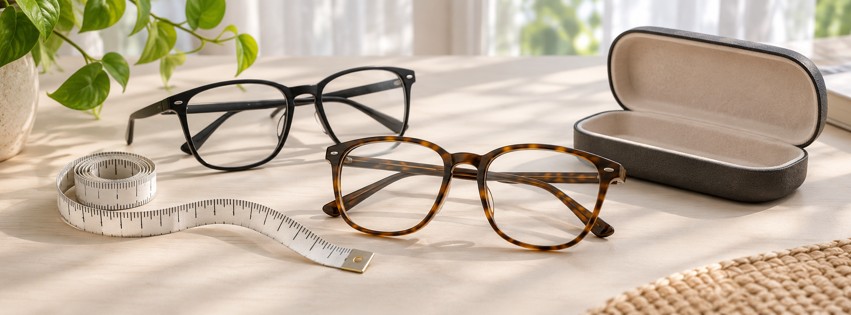
An online glasses order combines several decisions: the frame, its measurements, the required lens specification and the complete delivered price. A low starting figure can be useful, but it should not replace those checks. This guide explains how to organise a Low Cost Glasses shortlist and compare the basket you would actually buy.
See our Low Cost Glasses discount codes and offers page for current published promotions. Confirm the chosen frame and lens options with the official shop. This is a purchasing guide, not an eye examination, an interpretation of a prescription or advice to change a specification given by an eye-care professional.
Start with the information required for the order
Before browsing, identify which information the shop asks you to provide for the intended purchase. Keep the relevant prescription and measurements available and check the merchant’s instructions. If you do not understand a required value, ask the retailer or the appropriate eye-care professional rather than guessing.
Do not copy values from a different person or substitute a familiar strength for a prescription requirement. An attractive promotion is not a reason to skip a necessary check. Keep the ordering information separate from your list of frame styles so that the practical specification remains clear throughout the process.
If the site allows information to be supplied after choosing a frame, read how that process works. Check what needs to happen before the order can be completed or dispatched and which contact details should be used if a question arises.
Use an existing frame as a comparison aid
A pair that you already find practical can provide a starting point for comparing frame measurements and shape. Note the measurements shown on the frame if available and compare them with the retailer’s listing. Do not assume that two frames described as medium have identical dimensions.
Look at width, bridge and side information alongside the overall shape. A photograph alone can make a small and a large frame look similar. Read the product measurements and ask the retailer about any missing detail that matters to the fit you are considering.
Treat this as a shopping comparison rather than a guarantee of comfort or suitability. If the fit of your current glasses is itself a problem, do not simply reproduce it. Obtain the appropriate assistance to establish what information should guide the new purchase.
Choose a shortlist that fits your routine
Think about where and how you intend to use the glasses. Decide which colours, frame shapes and practical features you prefer, then narrow the range to a manageable shortlist. Keep the required specification central instead of choosing solely by the promotional photograph.
Compare several images of each frame and read the material description. Look at the side profile and bridge design as well as the front view. Screen colour and lighting can affect appearance, so avoid treating a product image as an exact physical colour sample.
For a spare pair, decide what purpose it should serve and set a budget for the complete specification. A second purchase is still additional spending; it should solve an actual need rather than being added only because a discount is available.
Keep frame price and lens price separate
Read what the displayed starting price includes. Check the available lens choices and any additional charges before comparing the product with another frame. The cheapest headline may not be the cheapest completed order once the required options are selected.
Use the same intended lens specification for each comparison. A basic configuration from one listing and a more expensive option from another are different baskets. Record the frame price, chosen lens options and final amount separately so you can see which selection changes the cost.
Do not choose a lens option merely because it has an appealing label. Read the description and ask for clarification if you are uncertain whether it meets your requirements. Where the question concerns your prescription or visual needs, obtain advice from the appropriate professional rather than using a shopping article to decide.
Read optional extras carefully
During configuration, review each optional addition and its price. Check what is included as standard and what is an extra purchase. A list of available features should not be read as a list of items included in every frame’s starting price.
Compare the benefit you expect to use with the additional cost. Avoid treating every upgrade as necessary or assuming that the most expensive configuration is automatically the right one. If you cannot explain why a selected extra is in the basket, pause and clarify it before paying.
Keep a record of the final configuration. It helps distinguish the pair you ordered from an earlier shortlist and provides a useful reference if the shop asks a question during processing.
Use the current public promotion
The official homepage currently advertises a flat 33% discount on glasses with a public checkout code. Check our offer listing for the current code, then review the shop’s conditions and accepted basket calculation. Do not assume that an older promotion found in a search result remains the current offer.
Apply the code in the designated field after choosing the intended frame and lens options. Check which amounts are reduced and whether any product or option has a separate condition. A headline should not be extended to an excluded charge or combined with another promotion without confirmation.
Compare the completed order after the accepted reduction. Do not add separate percentages together or treat a saving on a frame as proof that every option has the same reduction. The final basket is the useful evidence of what the offer does for your order.
Look at clearance without losing the required specification
Clearance can be worth browsing when the available frame meets your practical requirements. Check stock, colour and measurements for the exact listing. A reduced frame that is the wrong size or unavailable in the intended configuration is not a useful alternative simply because its starting price is low.
Read any clearance-specific conditions before deciding. Do not assume that every clearance item has the same return arrangements as the rest of the range or that a public code applies on top. The selected product and the merchant’s current terms should guide the comparison.
Keep one suitable non-clearance alternative on the shortlist. It provides a realistic reference if the first choice sells out or if the completed configuration makes the apparent saving less attractive.
Include delivery in the price
The official UK homepage advertises free UK delivery on orders over £40. Check the current coverage and checkout total for the actual address and basket. A threshold should not be used as a reason to buy an unnecessary item whose cost exceeds the delivery saving.
Read the order-processing and delivery information for the chosen configuration. Preparation of an order and transport after dispatch are different stages. Do not assume that a delivery service name establishes when a configured pair will be ready to leave the shop.
If timing matters, ask the retailer about the intended order before relying on it for an event or trip. Keep a practical margin for questions, processing and inspection instead of treating the fastest headline as a guaranteed date.
Understand the guarantee and returns process
The homepage advertises a 30-day money-back guarantee. Read the full conditions for the actual product and order, including what the period covers, how to contact the shop and any requirements or exclusions. A short guarantee headline is not a complete explanation of the process.
Keep the confirmation, chosen specification and packaging information while inspecting the delivery. If something appears different from the order, contact the retailer with clear details and follow its stated instructions. If the issue concerns vision or a prescription question, use the appropriate professional support rather than trying to resolve it through a discount guide.
Avoid discarding the product reference or order details once the parcel arrives. A clear record makes an enquiry easier and reduces confusion between the selected configuration and other frames you considered.
Compare three complete baskets
For each shortlisted frame, record the measurements, colour, material description, intended lens options, delivery cost and final price after any accepted promotion. Add a note about stock and relevant return conditions. This turns the decision into a comparison of realistic purchases.
For example, a slightly higher starting frame price may lead to a similar completed total once the same lens specification is selected. Another option may be attractive because it matches the measurements you are comparing, rather than because it has the largest advertised reduction. Keep the reason for each preference explicit.
Once a suitable option meets the requirements within budget, review the configuration and order information one last time. Save the final summary before payment so you have a record of the purchase you actually authorised.
Common questions
Does the starting price include every lens option?
Check the listing and configuration. Compare the complete specification you intend to buy rather than assuming all available extras are included.
Should I guess a missing prescription value?
No. Ask the retailer or the appropriate eye-care professional for the information needed to complete the order correctly.
Can I assume a code combines with clearance?
Read the current conditions and check the accepted basket. Do not extend a promotion beyond the merchant’s stated eligibility.
Where can I check the latest offer?
Use our Low Cost Glasses offers page and confirm the current code, frame options and final UK total at the official shop. A suitable configuration and clear purchase conditions matter more than the headline alone.