WatchHome UK Buying Guide: Watch References, Fit and Real Sale Value
Posted on |
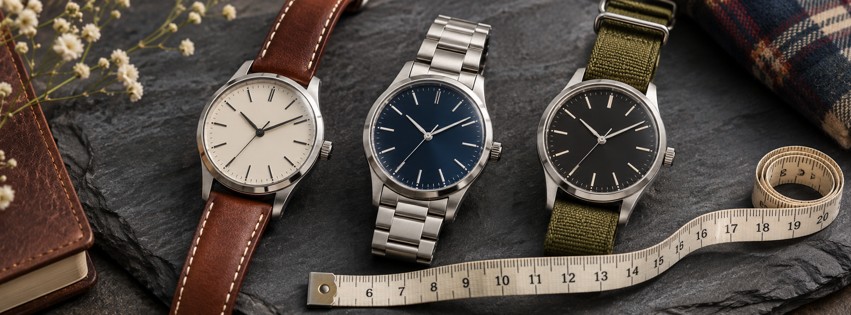
WatchHome UK buying guide: choose the watch before choosing the saving
A watch is both a practical object and something you will see and wear regularly. A large sale badge is therefore a poor substitute for checking the exact reference, dimensions and strap. WatchHome’s UK-facing catalogue includes watches, jewellery and other accessories, with prices shown in pounds. Its storefront advertises selected-brand savings and a first-order newsletter benefit, but those statements do not make every product or basket identical.
This guide offers a comparison method. It is not a hands-on watch review, an authentication service or a claim that we have tested the retailer’s checkout. Find the latest qualified benefits on our WatchHome discount code and offers page, then match the chosen product to your own requirements.
Choose the intended role of the watch
Start with when you expect to wear it. A discreet everyday watch, a dressier occasional piece and a gift have different priorities. Consider the clothing and accessories it will accompany, the functions you want to read and how often you expect to wear it. Write those requirements down before comparing the widest range of brands.
Separate a requirement from a preference. A particular display feature may be essential, while a colour detail may be negotiable. A strap that suits your wrist matters more than an impressive discount on a watch you would not comfortably wear. Keeping two or three practical requirements visible helps prevent a promotion from quietly changing the purpose of the purchase.
Record the complete product reference
Use the full manufacturer reference in your shortlist, not only the brand and a broad collection name. Similar references can identify different dial colours, case finishes, straps or supplied packages. Check the selected listing and any option selector together before recording a price.
This is especially important when comparing across retailers. A photograph that looks familiar may represent a different version, and a shortened search-result title can hide that distinction. Keep the complete reference beside the current price, included contents and unresolved questions. Compare equivalent items before deciding which shop’s offer is stronger.
Think about size on your own wrist
Read the stated case measurements and compare them with a watch you already find comfortable. A close-up photograph is not a reliable indication of scale. Consider the shape as well as the diameter, and read any thickness or strap-width information that the listing provides.
If buying a gift, try to learn the recipient’s preference without assuming that a broad category such as men’s or women’s establishes the right size. A familiar watch can provide a useful reference. Where a key dimension is absent, ask for it before ordering. A large percentage reduction does not resolve a fit question.
Check the strap or bracelet details
Read the stated material, fastening and size information for the actual version. A leather-look strap, a fabric strap and a metal bracelet should not be treated as interchangeable simply because the dial looks similar. Think about the recipient’s preferences and the way the watch will be worn.
If adjustment may be needed, ask what the retailer supplies and what arrangements are available. Do not assume resizing is included in a delivery benefit or that every bracelet has the same adjustment method. Include any known necessary service in the complete purchase comparison. Keep supplied parts and packaging in accordance with the merchant’s instructions.
Read the movement and function specifications
Look for the movement type and the functions described for the specific model. A decorative feature in a photograph is not proof of a function, and a product family may contain several versions. Decide which functions you actually want rather than choosing the longest specification list.
For a feature that matters to your intended use, confirm its meaning with the manufacturer’s information or the retailer. This guide does not turn a general product category into a guarantee of performance. Read the instructions for care and operation supplied with the selected watch instead of applying assumptions from another model.
Understand what comes in the package
Check the listing for the supplied box, documentation, accessories and any stated warranty arrangement. A promotional photograph may show presentation materials without describing the exact contents of every listing. If a gift box is important, obtain confirmation for that item rather than assuming it from the brand name.
Keep seller statements separate from your own verification. We do not describe a retailer as independently authenticated or authorised solely because it makes that claim on its website. If documentation or warranty handling is central to your choice, ask for the current arrangement in writing and retain the answer with the product reference.
Make a selected-brand sale comparable
WatchHome’s storefront advertises savings of up to 60% on selected popular brands. The maximum is not a blanket reduction on every watch. Select the exact reference and read its current price and comparison price, where provided. Do not apply the headline maximum to an item whose listing shows a different reduction.
Compare the final price of equivalent watches across your shortlist. A larger percentage based on a different starting price does not necessarily produce a lower payable amount. Condition, version and supplied contents also need to match. Keep the sale label in perspective: the watch still needs to meet the purpose you identified before browsing.
Assess the first-order newsletter benefit
The merchant advertises a 10% first-order discount through newsletter signup. That is a conditional welcome benefit. Follow the official signup process if you wish to receive it and read the personal instructions and restrictions. We do not publish an invented universal code in place of a welcome message.
Check whether the selected product qualifies and whether the benefit can combine with a reduced price. Do not assume two percentages add together or that every brand shares the same eligibility. Include a personal saving in the comparison only after you qualify and the merchant’s calculation confirms the actual deduction.
Keep shipping conditions market-specific
The UK storefront advertises free UK delivery alongside separate international-shipping messaging. Use the UK information and the options for your actual address. Do not apply an international threshold shown in another currency to a UK basket without checking the relevant terms.
Read the selected service and current arrival estimate before buying for an occasion. The word fast is not a personal guarantee of a particular arrival date. Distinguish dispatch from delivery, and ask the retailer to clarify an essential timing question. An optional premium service may have a separate charge or conditions.
Compare jewellery and accessories on their own terms
If you add a charm, bracelet, frame or other accessory, identify its specific size, material and compatibility requirements. A recognisable brand name does not establish that every accessory fits an existing item. Read the full reference and supplied contents rather than relying on a small product card.
Evaluate extras separately from the watch purchase. An additional item is worthwhile when you want it and understand the price, not merely because it makes the basket look more substantial. Keep optional accessories in a separate part of your shortlist so that the original purchase budget remains visible.
Check the return arrangement before ordering
Read the merchant’s current returns instructions for the selected product, including timing, condition and any cost of sending an unwanted item back. Do not assume that free outward delivery also means free returns. If a sizing or presentation question would affect the decision, ask before committing rather than planning around an uncertain return assumption.
Keep the confirmation and the listing details. When the order arrives, check the model reference and package contents according to the retailer’s instructions before removing protective materials or arranging adjustments. If something differs from the order, contact the official support channel with the specific reference and a clear description.
Use a clear final-price comparison
Review the chosen watch, variant, supplied contents, eligible promotion, delivery option and any necessary adjustment or extra. Compare that complete figure with a genuinely equivalent alternative. Remove an unconfirmed personal benefit from the calculation rather than treating it as guaranteed.
Return to our WatchHome offers page when you are ready to order, and recheck the merchant’s variable prices and conditions. Keep the product comparison method even when a campaign changes. A successful choice is one whose reference, fit and complete price make sense for your intended use.
A simple comparison record
For each shortlisted watch, keep one line containing the full reference, selected finish, strap, relevant dimensions, included contents, current price and delivery arrangement. Add the date you checked it. If you return later, verify those variable details again. This small record helps you distinguish an actual price change from a switch to a different version, and it makes a question to the seller much more precise.
Compare a hypothetical sale with a welcome benefit
Suppose an eligible watch is listed at £120 and a personal 10% welcome benefit is accepted against that price. The resulting product amount would be £108 before any separately charged service. Another listing at £105 would still be cheaper if the model, condition and package were truly equivalent. These figures are examples, not current WatchHome prices or a statement that its welcome benefit combines with every sale. Use your chosen reference and the merchant’s actual calculation. If eligibility is unresolved, keep both the confirmed price and the possible benefit visible rather than presenting the lower amount as certain. That makes the comparison honest and helps you decide whether the difference is material enough to investigate.