AUTODOC UK Buying Guide: Part References, Quantities and Savings
Posted on |
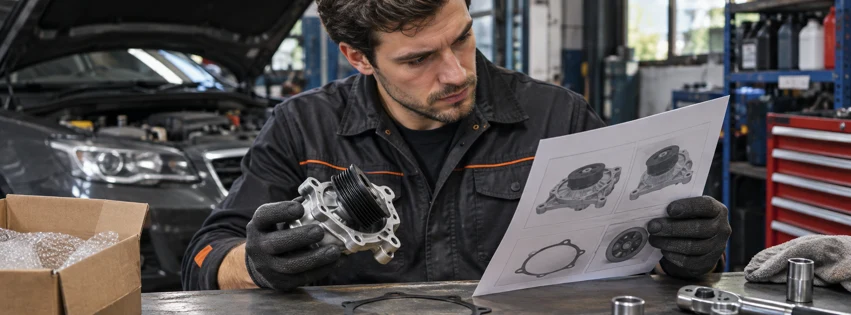
How to plan an AUTODOC UK parts order
Buying car parts online starts with identifying the correct component for the exact vehicle. A discount is useful only after compatibility, quantity and the intended repair are clear. AUTODOC’s UK catalogue offers vehicle lookup and detailed product references, but shoppers still need to review the listing carefully. This guide explains a purchase-planning process; it does not diagnose a vehicle fault or provide fitting instructions.
Use our AUTODOC discount codes and offers page to compare researched promotions after you have identified the part. Product reductions and extra code savings are different kinds of offer. Keep the comparison basis visible, particularly when a reduction is shown against a recommended retail price rather than a previous selling price.
Identify the vehicle and the component
Record the vehicle details required by the catalogue, including the relevant model, engine and production information. Registration lookup is a useful starting point, but a model family can contain several component versions. Read the compatibility information and compare an original equipment reference where one is available. If the repair has not been diagnosed, ask an appropriate professional to confirm what is required before buying a suspected part.
Keep the intended position of the component with the reference. Front and rear, left and right, or different axle arrangements can lead to different products. A photograph alone is not enough to establish suitability. Check the technical information that matters for the component, and ask the retailer or your repair professional when two apparently similar options remain.
For maintenance products, use the manufacturer’s required specification rather than selecting only by a familiar brand or a broad label. A description such as engine oil is not sufficiently specific for every vehicle. The correct approval, capacity and intended use matter. This buying guide deliberately leaves technical selection and repair decisions to the relevant authoritative information and professional advice.
Check the quantity and package contents
A displayed price may be for one item even when parts are commonly considered in pairs. Confirm the unit and package quantity on the exact listing. If you need several items, calculate the complete job’s parts basket instead of comparing a single headline price. Read whether mounting components or accessories are included or supplied separately.
Compare equivalent products. A bare component, a kit and a larger assembly can have very different contents. Write down the product reference and included items so you do not compare the lowest visible prices for different packages. If a repair professional will fit the part, ask them to confirm the required specification and quantities before placing the order.
Check whether the listing is sold by AUTODOC or another seller where that information is provided. The purchase conditions, delivery arrangements and support path shown for the selected offer matter. Do not assume every product displayed in a large catalogue shares the same dispatch estimate or return process.
Understand the savings comparison
The UK homepage displayed selected parts with reductions against RRP when reviewed, including a listed brake disc at 74% below its stated RRP. That is a specific comparison on selected stock, not a claim of 74% off every order or of a fall from yesterday’s selling price. Check the reference price label and the current product price together.
A percentage discount against RRP and an additional promotional code cannot simply be added together as if they applied to the same base amount. Inspect the basket and the code conditions to see whether both benefits are accepted. A smaller headline saving on the exact part you need can be better value than a bigger percentage on an unsuitable alternative.
Our research also found a public listing for a 3% UK code. Treat it as subject to merchant acceptance and product restrictions, rather than a guarantee for every basket. We have not completed a paid checkout. The official coupon guidance explains that tyre purchases and using bonus credit can affect coupon redemption, so check those conditions when comparing an offer.
Avoid relying on expired examples
A merchant’s informational article may contain example codes with old deadlines. Read the stated status and date rather than assuming that a page title containing the current year makes every example active. We exclude examples that the source marks expired or whose listed closing date has passed. A historical Black Friday code is not evidence of a current event.
If you have an eligible code, copy it exactly into the checkout field and review the response. The official guidance describes using one coupon per order and restrictions on combining coupons with bonus credit. Check the current terms for your actual basket. Repeatedly trying unrelated country codes is less useful than confirming the eligibility of one relevant offer.
Coordinate the order with the repair
Confirm the delivery estimate before booking fitting work around an expected parcel. An appointment can be harder to rearrange than an online basket. If the car is needed urgently, discuss the timing and sourcing options with the professional doing the work. The cheapest advertised component is not necessarily the most practical route when availability is uncertain.
Keep a record of the vehicle details and part reference that were checked. If an alternative or replacement reference is suggested, verify its suitability rather than assuming that a similar name makes it interchangeable. Avoid opening or modifying uncertain components before asking for clarification. An accurate order record also makes a support enquiry easier to handle.
Make a support question specific
If you need help choosing between two listings, prepare the vehicle information, both product references and the particular difference you want explained. Asking whether a part fits “my car” without those details leaves too much uncertainty. A concise question about the relevant specification, position or package quantity gives the retailer or repair professional something concrete to check. Keep their response with the order record and confirm that it refers to the exact item selected. If your vehicle has been modified, make that relevant context clear to the person advising you rather than assuming the standard catalogue description covers every change.
Questions before ordering
Does a vehicle lookup guarantee the part?
Use it as a starting point alongside the detailed compatibility information and the exact required reference. Ask for confirmation where there is uncertainty, especially before a specialist repair.
Is a reduction against RRP the same as a discount code?
No. One is a stated product-price comparison; the other is a promotion applied to eligible checkout items. Review each on its own terms.
Should I buy an extra item to reach a saving?
Only when it has a real use and the full calculation makes sense. Consider delivery, quantity and the specification, not just the next discount threshold.
Where are the current offers?
See our AUTODOC UK offers page, then confirm the accepted saving and exact part details in the shop. Product availability and promotional eligibility can change.
Compare the delivered basket
Write down the exact model, selected variant, included quantity and delivered price as you compare offers. A listing photograph can show several accessories even when the selected price covers only one item. Check the package contents and the version you have chosen before treating two prices as equivalent. Keep any compatibility requirement beside the product reference so it is not lost while browsing.
Use the final basket total rather than a discount badge as your main comparison. Delivery charges and optional services can outweigh a small reduction. A threshold for another saving is not a reason to add an unwanted item automatically. Calculate the extra cost and additional benefit separately, then decide whether the extra purchase also has a real use.
Plan delivery and inspect the parcel
Check stock and the current delivery estimate for your address before arranging a project or occasion around a purchase. A headline dispatch claim may not describe every variant or destination. If several products are needed together, compare their individual availability rather than assuming that a basket will arrive in one parcel. Choose the service that fits your actual timing and budget.
When the delivery arrives, compare the supplied reference, quantity and accessories with the order confirmation. Keep the packaging until you have checked the contents. If something is missing or inconsistent, clear photographs and the exact item reference help the merchant understand the problem. Follow the shop’s process rather than making an adjustment to an uncertain product simply to make it fit.
Read the purchase conditions before paying
Review the current returns instructions, any relevant deadline, product-condition requirements and possible return charges. Do not assume that a policy used for another country, seller or earlier order applies unchanged. Keep proof of return where relevant until the matter is resolved. A discount reduces an eligible price; it does not remove the practical steps involved in an unsuitable purchase.
If a code is rejected, check the exact text and its customer, product and spend restrictions. A sale price, member benefit and promotional code may follow different combination rules. Confirm the accepted saving before payment instead of expecting an unconfirmed adjustment later. Our source research does not imply personal product testing or a completed paid checkout.